SayaraBattery
7 min read

Car Won't Start? How to Tell a Battery, Alternator or Starter Problem

Clicking, slow cranking, or dying after a jump start each point to a different fault. Match your symptoms to the likely cause, see the voltages to look for, and know when to call for a test.

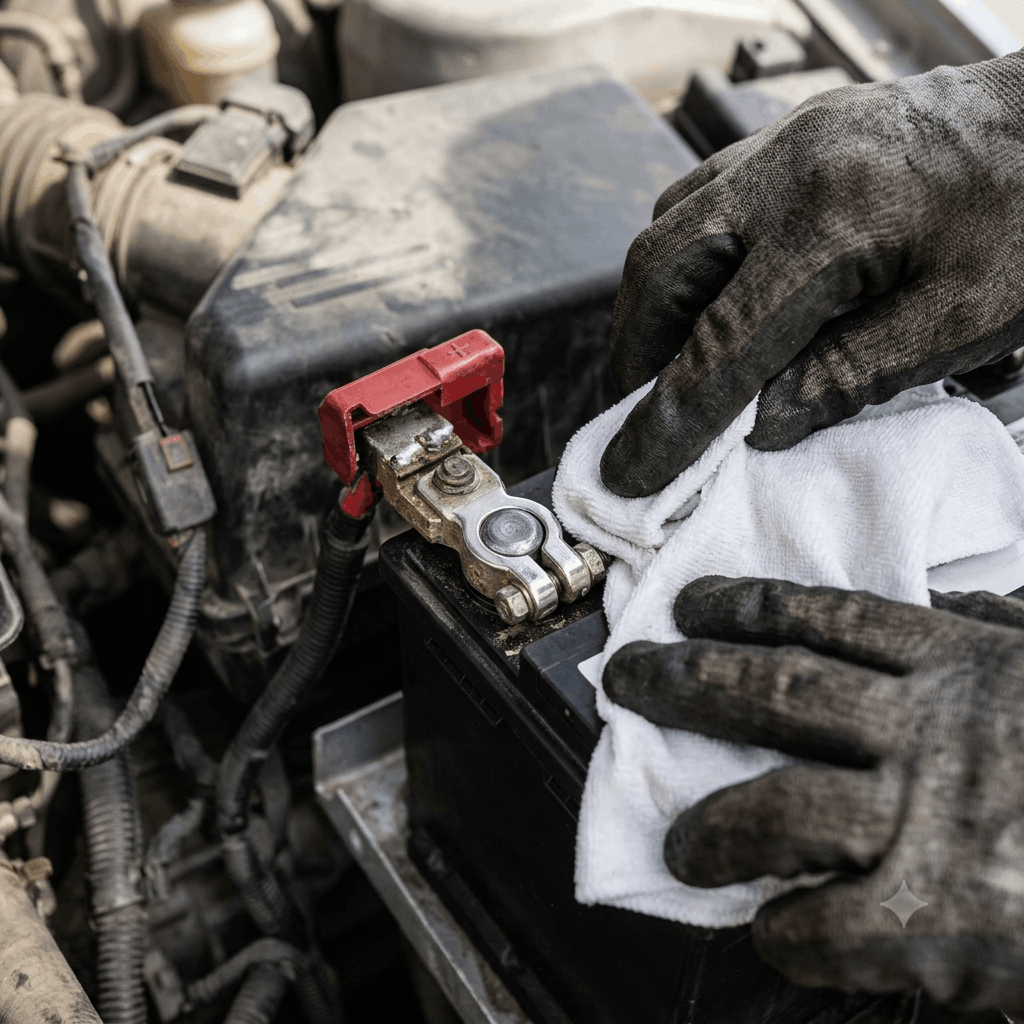
Close-up of a car battery terminal connection being checked

Quick answer

A slow crank or rapid clicking with dim lights usually means a weak or flat battery. A car that starts after a jump but dies again soon after, or shows a battery warning light while driving, points to the charging system and alternator. A single loud click while the lights and radio work normally often means the starter. A car that cranks at normal speed but won't fire is usually not a battery problem at all. The only way to be sure is to test the battery and charging system, which takes a technician a few minutes.

Match the symptom to the likely cause

What you noticeMost likely cause
Slow, laboured cranking, especially in the morningWeak battery
Rapid clicking, dim dashboard and headlightsFlat or failing battery, or a poor battery connection
Nothing at all: no lights, no soundCompletely flat battery or a disconnected or corroded terminal
One loud click, but lights and radio work normallyOften the starter motor or its connection
Starts after a jump, then dies again soon afterCharging problem, often the alternator
Battery or charging warning light while drivingCharging system fault
Lights dim and brighten while driving, whining or growling from the engine bayAlternator or its drive belt
Battery flat every morning, fine after a driveSomething draining the battery while parked, or a battery that can no longer hold charge
Engine cranks at normal speed but won't startUsually fuel, ignition or immobiliser, not the battery
Swollen battery case or a rotten-egg smellDamaged or overcharged battery. Don't touch it; get it checked

Three quick checks you can do safely

  1. Watch the dashboard as you turn the key or press start. Lights that dim sharply or go out while cranking point to the battery.
  2. Try the headlights. Bright headlights and a dead starter suggest the problem is not simply a flat battery. Very dim or no headlights point to the battery or its connections.
  3. Look, don't touch. Open the bonnet and look at the battery terminals. White or green crust or a visibly loose clamp can stop current getting through. Leave cleaning and tightening to someone with the right tools and protection: battery acid is corrosive.

The numbers, if you have a multimeter

A voltmeter across the battery terminals gives a useful first clue:

  • Engine off, car rested for a few hours: Varta puts a fully charged 12V battery at about 12.8 volts and recommends recharging below 12.4 volts. GS Yuasa gives 12.57 to 12.75 volts as fully charged.
  • Engine running: a working charging system typically shows about 13.7 to 14.7 volts (Interstate Batteries); AAA quotes 13 to 14.5 volts. A reading close to the engine-off figure suggests the alternator isn't charging.

Two caveats. Many modern cars have smart alternators that vary the charging voltage on purpose, so one reading isn't conclusive. And voltage only shows how charged the battery is, not how healthy it is. A worn-out battery can show a full 12.7 volts and still fail to start the car.

What a proper battery test adds

A professional test separates two things that drivers often confuse:

  • State of charge: how full the battery is right now. A flat battery can still be perfectly healthy after a recharge.
  • State of health: how much of its original capability is left. An electronic conductance tester estimates this against the battery's rated cold cranking amps, so it can spot a battery that is charged but worn out.

We also check the charging system with the engine running and look at the terminals and cables. Our battery and charging test is free, and done wherever your car is parked.

What happens next

  • Battery healthy but flat: a jump start and a good drive, plus finding what drained it.
  • Battery worn out: we replace it on the spot after you approve the price.
  • Charging or starter fault: we tell you, and you are under no obligation to buy a battery. If the car can't be driven, we arrange recovery to your preferred garage.

One more reason to test before replacing: a faulty alternator will kill a new battery too, and battery warranties do not cover damage caused by another fault in the car.

Sources

Written by the SayaraBattery team, mobile car battery technicians in Dubai.

Frequently asked questions

Can a bad alternator ruin a new battery?

Yes. An alternator that undercharges leaves the battery permanently low, and one that overcharges can damage it. That is why we test the charging system before fitting a new battery.

Why does my car start after a jump but not the next morning?

Either the battery can no longer hold a charge, something is draining it while the car is parked, or the alternator isn't recharging it while you drive. A battery and charging test tells you which.

Is it safe to keep jump starting my car?

It is a sign something needs fixing. Repeated deep discharges damage the battery further, and a car that needs a jump every day will eventually leave you stranded. Get it tested.

Battery Trouble Right Now?

Send your location and a technician will come to your car.

Send My Location

Available 24/7, anywhere in Dubai.

WhatsApp — Get Battery HelpCall