Quick answer
A battery that goes flat overnight has one of three problems: something in the car keeps drawing current while it is parked (a parasitic drain), the battery itself can no longer hold a charge, or the alternator isn't recharging it while you drive. Test them in that order: battery health first, then the charging system, then the drain. In the UAE, hard-wired dashcams and aftermarket trackers are among the most common causes of drain. If the drain or the charging fault is the problem, a new battery will just go flat again.
The three causes
| Cause | Typical signs |
|---|
| Parasitic drain | Flat after a night or a few days parked; starts fine after a jump and drives normally |
| Failing battery | Slow cranking that gets worse, battery over three years old, fails a load test even when charged |
| Charging fault | Battery warning light while driving, dim lights, goes flat even on days you drive a lot |
A simple fault-finding order
- Test the battery. Charge it, then load-test it. A battery that fails when fully charged is worn out, and that alone can explain everything.
- Test the charging system. With the engine running, most cars should show about 13.7 to 14.7 V across the battery. Much lower points to the alternator, its belt or the wiring.
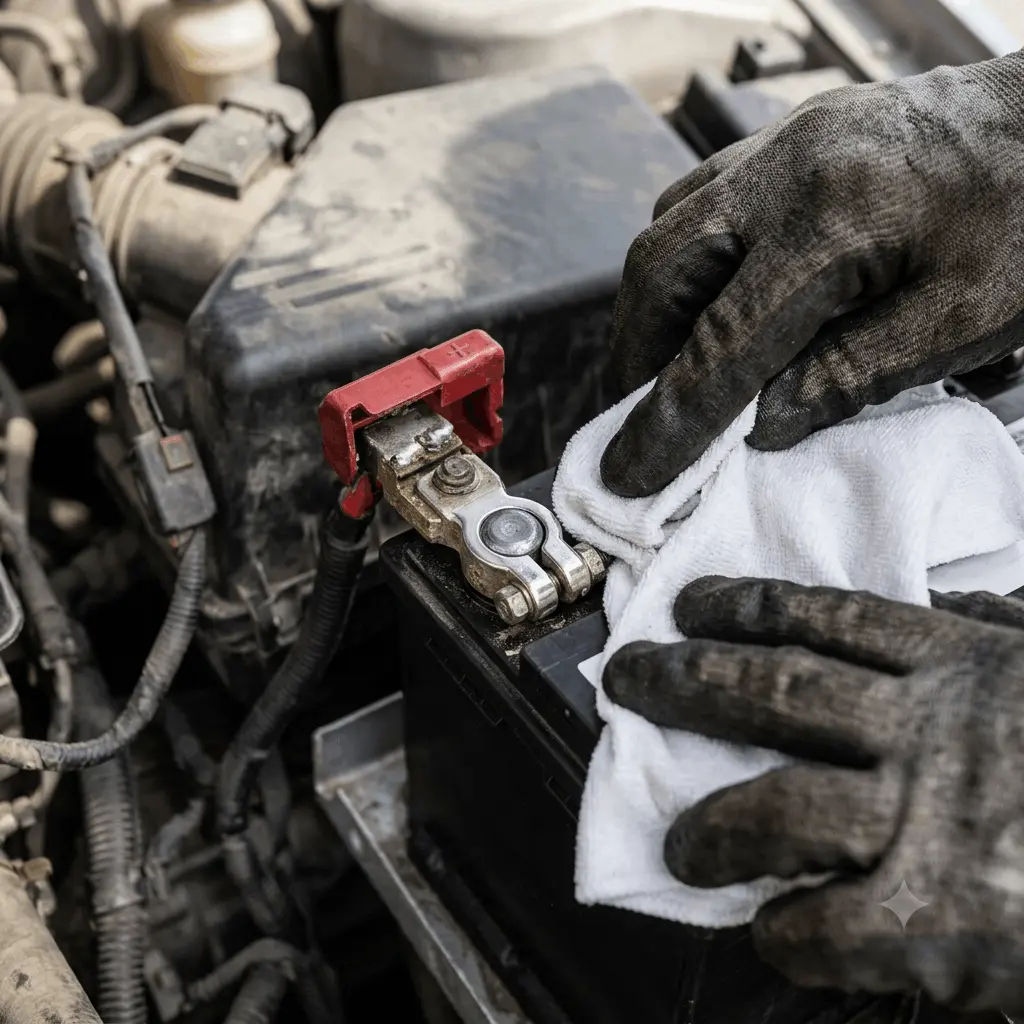
- Check the connections. A loose or corroded terminal stops the battery charging properly and can look like a drain.
- Measure the drain. Only once the battery and charging are confirmed healthy is it worth hunting for what is drawing current.
What a drain test measures
A technician puts an ammeter in series with the battery and waits for the car to lock and its control units to go to sleep, which can take anywhere from a few minutes to much longer on modern cars. The reading is the standby current, in milliamps (mA). Germany's ADAC motoring club measured 5 to 40 mA on properly locked cars. A reading well above that, or one that never settles, means something is staying awake. Pulling fuses one at a time narrows down which circuit it is on. The acceptable figure for your car is the manufacturer's, so treat these numbers as a guide.
Common causes of drain in the UAE
- Dashcams with parking mode, hard-wired to run while the car is off. Most have a low-voltage cut-off; if it is set too low or missing, they flatten the battery.
- Aftermarket GPS trackers and alarms, often fitted for insurance or fleet use.
- A boot, glovebox or door that isn't fully shut, keeping lights or modules awake. ADAC found cars that flattened their battery in about five days this way.
- Phone chargers and accessories left in sockets that stay live.
- A module that won't sleep after a software glitch or water damage.
Owners of some models, including the Toyota Camry, report recurring drain problems. The fix is the same: confirm battery and charging first, then measure the drain rather than guess.
Why do car batteries stop holding a charge?
Age and heat. Inside every lead-acid battery, the grids corrode and the active material wears out over time, and heat speeds that up. Being left partly flat, as a battery with a drain often is, makes it worse. Eventually the battery can't store enough to start the car after a night parked, even with nothing draining it. In the UAE that often happens around three years. See how long a car battery lasts in the UAE.
When a new battery won't fix it
- The alternator isn't charging: the new battery goes flat while you drive.
- There is a drain: the new battery goes flat while parked, and each deep discharge damages it.
- The terminals or cables are corroded or loose.
That is why we test before we sell. If your car won't start at all, our guide to battery, alternator or starter faults helps narrow it down.
Get it checked
We come to your car in Dubai, Abu Dhabi and Sharjah, jump start it if needed, and test the battery and charging system for free. You get a straight answer on whether you need a battery or something else.
Sources
Written by the SayaraBattery team, mobile car battery technicians in Dubai.